Drone management platform
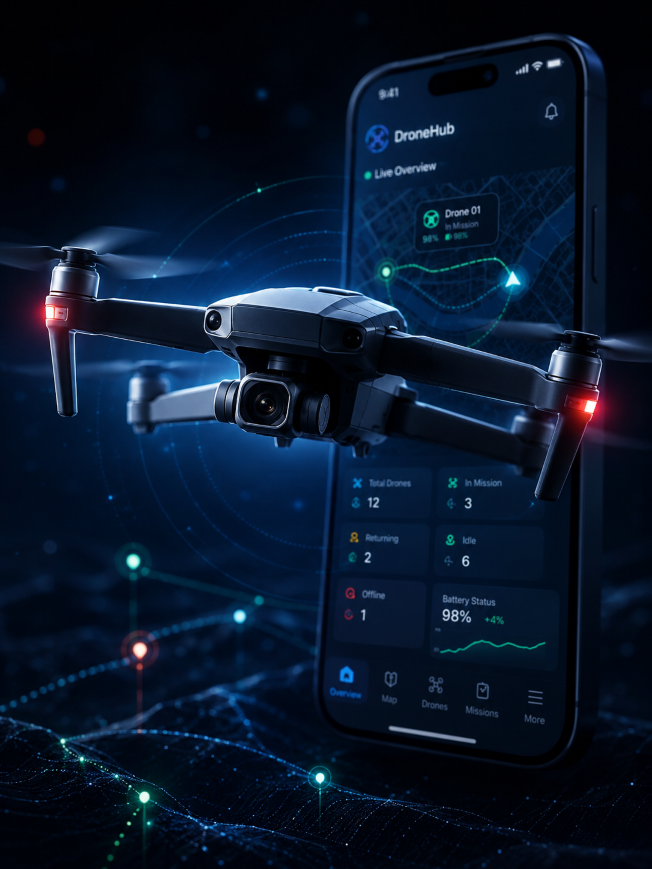
A drone management application was built to give operators full visibility and control over their drone and robot fleets. The system was designed to:
- Enable automatic charging without human interaction, tracked via real-time current and voltage charts
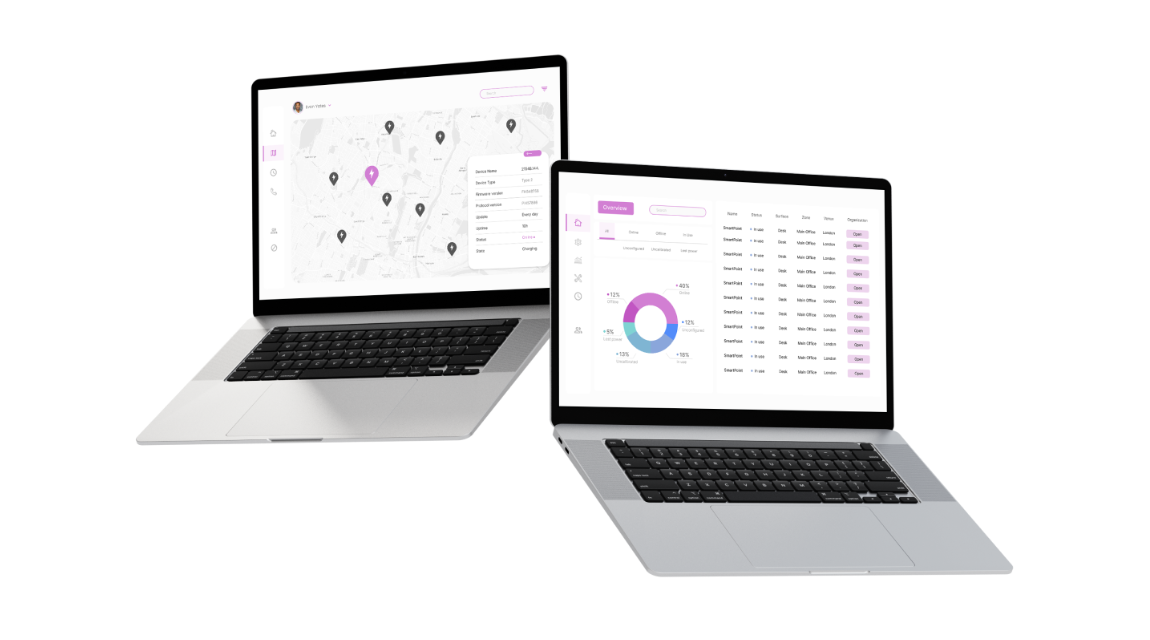
- Display all devices on an interactive map with live status filtering and search
- Provide detailed charging session history, filterable by date, client ID, and device name
- Support Google-based registration with role-based access for admins and users
The platform unifies fleet monitoring, charging management, and operational oversight in a single scalable application, delivering end-to-end visibility from device connection to session analytics.
Team structure
Backend Developer (Java / Micronaut / GraalVM), Frontend Developer (Angular / ECharts / RxJS)
Used technologies
Java, Micronaut, Angular 11, Bootstrap 4, AWS Lambda, AWS API Gateway, MongoDB Atlas, GraalVM, GraalVM Native Image, RxJS, ECharts
Development approach
We built the backend on Micronaut Framework with GraalVM Native Image, deployed on AWS Lambda with a custom runtime to achieve cold start times as low as 0.2 seconds. Reflection configuration was carefully managed to ensure compatibility between GraalVM's ahead-of-time compilation and all Java dependencies.
The serverless architecture was designed around AWS Lambda and API Gateway, addressing cold start sensitivity through native compilation over JVM-based execution.
The frontend was built in Angular 11 with Bootstrap 4, integrating ECharts for real-time charging visualisation and RxJS for reactive data streams. MongoDB Atlas serves as the data layer for device configurations, session records, and fleet metadata.
Result
A unified drone management platform replaced the need for manual oversight with a scalable, real-time application for fleet monitoring, automatic charging control, and session analytics. The serverless architecture delivered sub-second cold start performance at 0.2s, enabling reliable synchronous backend operations on AWS Lambda.
Operators gained a clear, map-based view of all connected devices alongside detailed charging charts for anomaly detection and performance analysis. Role-based access for admins and users, combined with advanced filtering and session history, significantly streamlined day-to-day fleet management and decision-making efficiency.