Fleet management platform
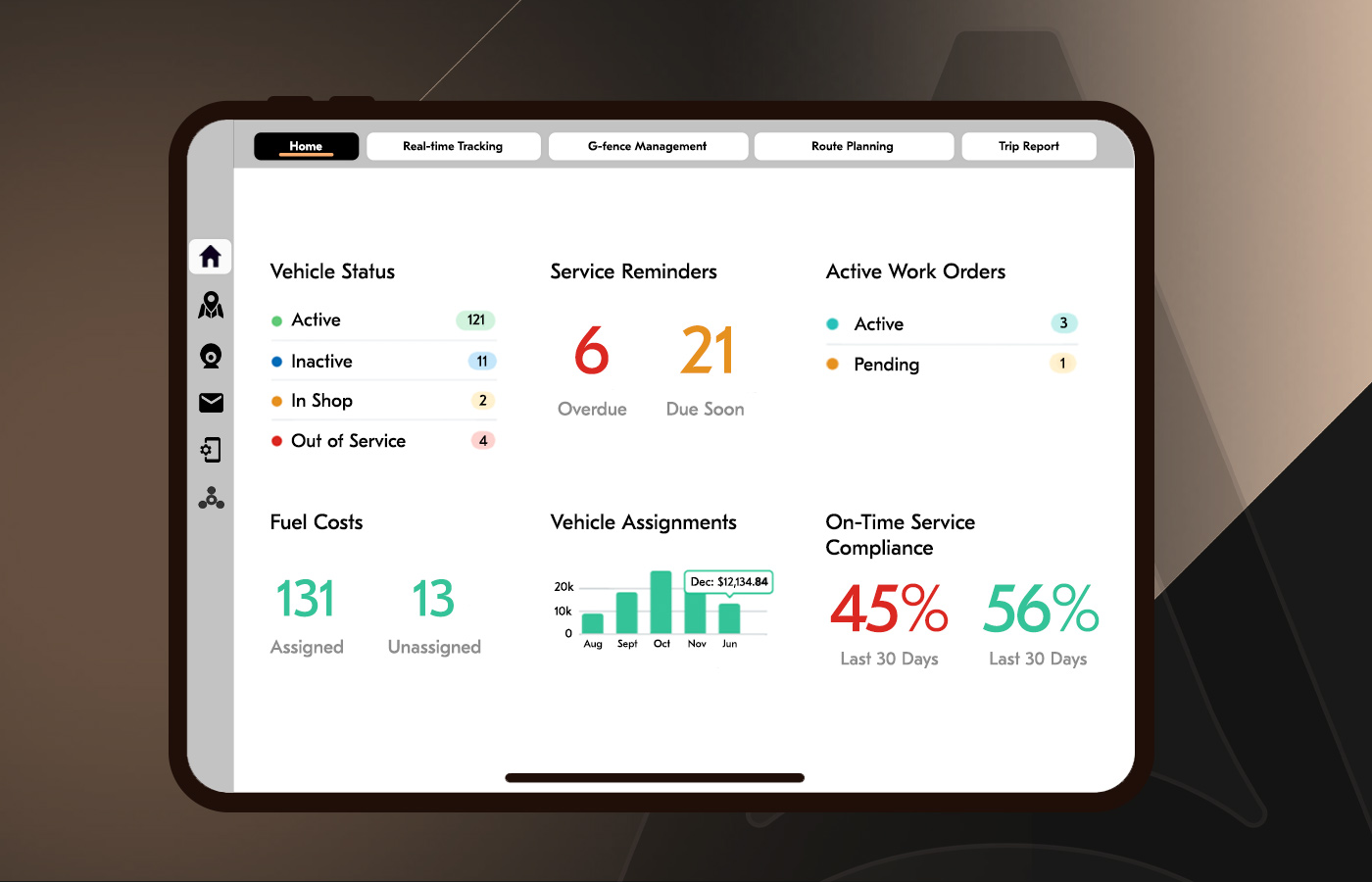
The web-based fleet management platform was developed for a Northern European freight carrier to replace fragmented, paper-driven workflows with a unified digital operations hub. The system was designed to:
- Provide real-time GPS tracking and dynamic route optimization for dispatchers
- Integrate live vehicle diagnostics and IoT sensor data into a single interface
- Replace manual logs and spreadsheets with automated, centralized dashboards
- Enable proactive maintenance scheduling and predictive fault detection
The platform delivers end-to-end fleet visibility, reduces manual workload across dispatch and compliance teams, and positions the carrier for scalable operational growth.
Team structure
1 solution architect, 1 backend developer, 1 frontend developer, 1 mobile developer, 1 DevOps / cloud engineer, 1 IoT integration engineer, 1 QA engineer, 1 data engineer, 1 project manager
Used technologies
Node.js, NestJS, TypeScript, PostgreSQL, Redis, WebSocket (Socket.IO), MQTT, React.js, React Native, Material-UI, Docker, Kubernetes, AWS (EC2, S3, RDS, CloudWatch, IoT Core), Grafana, Prometheus, Elasticsearch, BullMQ, RESTful APIs, OpenAPI/Swagger, JWT, OAuth 2.0

Development approach
To tackle fragmented infrastructure, we audited existing workflows, legacy software, and vehicle hardware, uncovering siloed data, paper-based records, and no real-time diagnostics.
The team built a microservices architecture with Node.js, NestJS, and TypeScript, PostgreSQL and Redis for data persistence, and WebSocket plus MQTT to stream live telemetry from OBD-II vehicles and IoT sensors. React.js dashboards provided live maps and role-based views for dispatchers, mechanics, and fleet managers.
The platform runs on Docker and Kubernetes on AWS, monitored via Elasticsearch, Prometheus, and Grafana.
Result
A fully operational fleet management platform replaced disconnected legacy tools with a single, real-time hub for vehicle tracking, diagnostics, and compliance. The system allowed for a 35% reduction in vehicle downtime through automated maintenance scheduling and early fault detection, a projected 20% decrease in fuel costs driven by smart routing and live tracking, and a 50% reduction in paper-based processes.